



The most common poster sizes in the UK are A4 (21 x 29.7 cm), A3 (29.7 x 42 cm), A2 (42 x 59.4 cm), 50 x 70 cm and A1. Use A4 on a shelf or desk and 50 x 70 cm or larger above a sofa or bed. The art should cover about two-thirds of the furniture width.
Most of the sizing mistakes I see go the same way: someone falls for a print, orders A4 because it feels safe, and then it hangs on a big wall looking like a postage stamp. So here are the sizes, what each one is good for, and a simple way to work out the right size for your wall before you order.
What are the standard poster sizes in cm and inches?
UK print sizes come from two families. The A sizes (A4, A3, A2, A1) are the paper sizes you know from the office, and each one is double the one below it. Then there are the "photo" sizes such as 30 x 40, 40 x 50 and 50 x 70 cm, which are a little squarer and match a lot of ready-made frames. Most prints in the Spade22 range come in a spread from 13 x 18 cm up to 60 x 90 cm, though sizes vary by print.
| Size | Centimetres | Inches (approx.) | Where it works |
|---|---|---|---|
| 13 x 18 | 13 x 18 cm | 5 x 7 in | Bookshelf, bedside table, small gallery wall filler |
| A4 | 21 x 29.7 cm | 8.3 x 11.7 in | Desk, shelf, bathroom, narrow wall beside a door |
| 30 x 40 | 30 x 40 cm | 12 x 16 in | Hallway, above a small chest, part of a pair |
| A3 | 29.7 x 42 cm | 11.7 x 16.5 in | Kitchen, home office, gallery wall mid-size piece |
| 40 x 50 | 40 x 50 cm | 16 x 20 in | Above a console, beside a bed, gallery wall anchor |
| A2 | 42 x 59.4 cm | 16.5 x 23.4 in | Bedroom wall, above a sideboard, a pair over a bed |
| 50 x 70 | 50 x 70 cm | 20 x 28 in | Above a sofa (as a pair) or a double bed, dining room |
| A1 | 59.4 x 84.1 cm | 23.4 x 33.1 in | Statement piece above a sofa, end of a hallway |
| 60 x 90 | 60 x 90 cm | 24 x 36 in | Large living room walls, open-plan spaces, above a king bed |
One thing the table can't show: a frame and mount add to the outside size. Depending on the frame, expect anything from a few centimetres to 10 cm or more on each side. Measure for the framed size, because that's what your eye reads on the wall.
Which poster size should I choose for each spot?
Shelves and desks: 13 x 18 cm to A4
Small prints look best leaning, layered in front of a slightly bigger one, or propped against books. A4 is the size I reach for most on a desk because it's readable from a chair without taking over. A simple line drawing like this wildflower line art print works at this scale because it has lots of empty space around it.
Hallways and small walls: 30 x 40 cm or A3
These two sizes are the workhorses. They fit between doors, above a radiator, or in a run along a corridor. If you're hanging two side by side, A3 gives you a pair about 70 cm wide once framed, which suits most console tables.
Above a sideboard or bed: A2 or 50 x 70 cm
This is where people undersize most often. A double bed is roughly 140 to 150 cm wide including the headboard, so a single A3 above it gets lost. One 50 x 70 cm print, or two A2 prints side by side, is a better match. I like a soft, calm piece in a bedroom, something like this abstract landscape in soft neutrals.
Above a sofa: 50 x 70 cm as a pair, or A1 to 60 x 90 cm alone
A three-seat sofa is often around 200 to 220 cm wide. Two-thirds of that is roughly 135 to 145 cm of art. A single 60 x 90 cm print in a frame gets you most of the way, and two 50 x 70 cm prints with a gap between them fill it well. Bold shapes read well from across a room, so this is a good place for something graphic like the geometric beige and black abstract.
Gallery walls: mix three sizes
Pick one large anchor (A2 or 50 x 70 cm), two or three mid sizes (A3 or 30 x 40 cm), and a few small ones (A4 or 13 x 18 cm). If every frame is the same size you get a grid, which can look great, but it's a different look from a gallery wall.
How do I pick a poster size for my wall width?
Here's the method I use. It takes five minutes and a tape measure.
- Measure what the art will sit above: the sofa, bed, sideboard or desk. If nothing sits below it, measure the clear wall width between doors, windows or corners.
- Multiply furniture width by 0.66 (about two-thirds). For a bare wall, use about half to two-thirds of the clear width.
- That number is the total width your art should cover, frames included. A 180 cm sofa gives you about 120 cm.
- Decide on one piece or several. For one piece, choose the size whose framed width is closest to your number. For a pair, divide by two and take off about 4 cm for the gap.
- Cut paper or old wrapping to the framed size and tape it to the wall. Live with it for a day. If it looks too small, it is.
Height matters too. The centre of the art usually sits around 145 to 150 cm from the floor, and over furniture the bottom edge goes 15 to 25 cm above the back of the sofa or sideboard. I've written about this in more detail in how high to hang art above a sofa and how wide to go.
Quick worked examples
- Desk 120 cm wide: art about 80 cm wide. Two A3 prints side by side, or one A2 landscape.
- Double bed with a 150 cm headboard: art about 100 cm wide. One 50 x 70 cm print plus a wide mount and frame, or two A2 prints.
- Sofa 210 cm wide: art about 140 cm wide. Two 50 x 70 cm prints, or a 60 x 90 cm piece with two smaller prints either side.
- Hallway wall 90 cm between doors: one 30 x 40 cm or A3 print, or two stacked vertically.
Is A3 or 30 x 40 cm the better poster size?
They look almost the same on the wall. A3 is slightly longer and narrower (29.7 x 42 cm), while 30 x 40 cm is a touch squarer. The real difference is frames. If you already own a frame, buy the print to fit it. If you're starting from scratch, choose whichever size the print comes in and order a frame to match. Spade22 prints in many designs come framed in black, white, wood or dark wood, so the size question goes away.
The same applies to A2 versus 40 x 50 cm, and A1 versus 60 x 90 cm. Stick to one family within a single arrangement so the gaps line up neatly.
Portrait or landscape: does orientation change the size?
It changes the width, so yes. A 50 x 70 cm print hung portrait is 50 cm wide; hung landscape, it's 70 cm wide. Over a long, low piece of furniture such as a sofa or a TV unit, landscape fills width without climbing too high. On a tall, narrow wall or in an alcove, portrait suits better. Most posters are designed one way round, so check the image before you plan the layout.
If you're building a gallery wall from prints that don't match in size or style, I've put together some rules that help in building a gallery wall from prints that don't match.
Shop the look
A few prints that work across several sizes. Calm, simple designs hold up at both A4 and 60 x 90 cm, which makes them easy to size up or down.


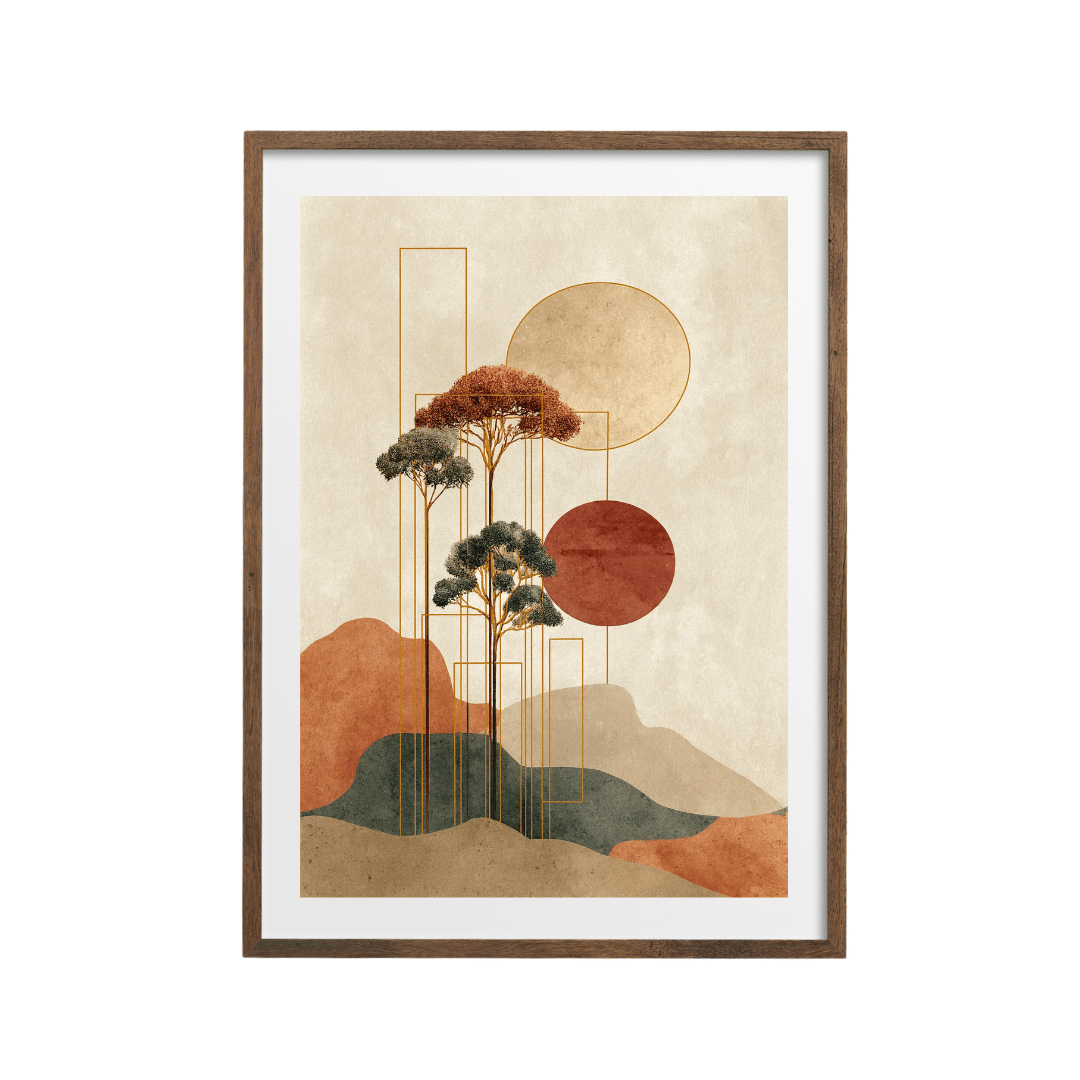
More to browse: the earth tones abstract painting in rust, ochre and black suits a big 60 x 90 cm frame, the beige and black brushstroke abstract pairs well at 50 x 70 cm, and the vase on a checkered floor print is lovely small on a kitchen shelf. You'll find plenty more in the minimalist poster collection and the framed prints collection.
Quick answers
What size is a standard poster in the UK?
There isn't one single standard, but A3 (29.7 x 42 cm), A2 (42 x 59.4 cm) and 50 x 70 cm are the sizes you'll see most. A2 and 50 x 70 cm are the usual "proper poster" sizes for a living room or bedroom.
What size poster should go above a sofa?
Aim for art that covers about two-thirds of the sofa's width. For a typical three-seater, that means two 50 x 70 cm prints side by side, or one 60 x 90 cm print in a frame.
Is A4 too small for wall art?
On its own on a large wall, usually yes. A4 is great on a desk, shelf or in a cluster of small frames, or as part of a gallery wall where bigger pieces carry the weight.
How much bigger is A2 than A3?
A2 is exactly double A3 in area. A3 is 29.7 x 42 cm and A2 is 42 x 59.4 cm, so the short side of A2 equals the long side of A3.
Should I measure the print or the frame?
Measure the frame. The outside frame size is what your eye sees on the wall, and a mount and frame can add several centimetres on every side.